
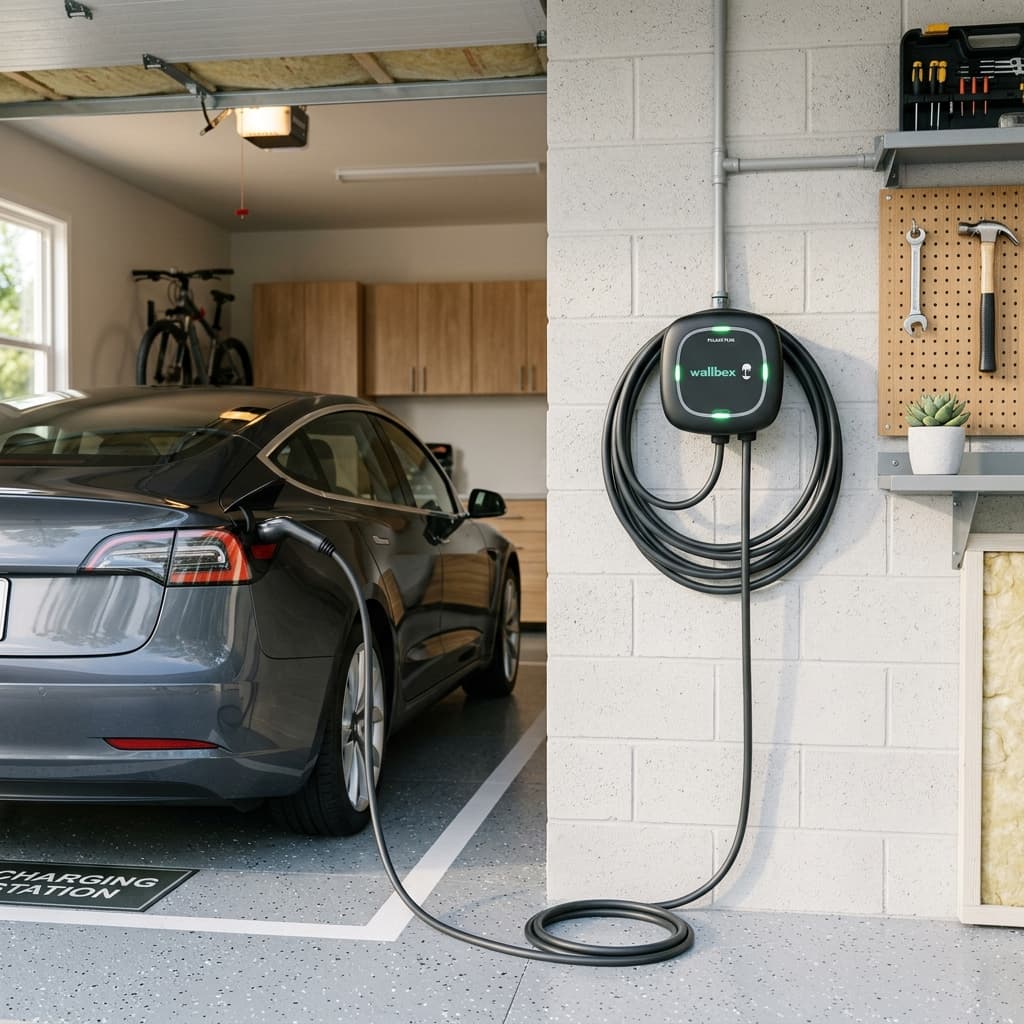
EV Charger Installation & 240V Electrical Outlets
Power your electric vehicle safely and efficiently from the comfort of home. We manage the site planning, electrical load balance check, conduit pathways, and panel preparation, coordinating with licensed electrical trades for safe, code-compliant final connections.
Connecticut Contracting manages design, pathway construction, mounting, and coordinator scopes. All final electrical connections, high-voltage wiring, and panel modifications are performed by licensed E-1 electrical subcontractors in strict compliance with the National Electrical Code (NEC).
Built Around Safety, Independence, Security, and Resilience
EV Load and Panel Review
Before running a new 240V line, we verify that your electrical panel has the capacity to support EV charging loads without overloading your service.
- Panel capacity analysis
- Available breaker spaces
- Load calculations
- Utility service evaluation
- Upgrade planning if required
- Load shed/management options
240V Outlet and Charger Placement
We design the most convenient and code-compliant locations for your charging equipment, whether inside a garage or on an exterior wall.
- NEMA 14-50 outlet installs
- Hardwired charger mounts
- Conduit path routing
- Weatherproof enclosures
- Safe cord management
- Access and parking alignment
Licensed Trade Coordination
We manage the entire preparation and coordinate the licensed electricians for the high-voltage connections, permits, and final sign-off.
- Permit application support
- Licensed E-1 trade matching
- Inspection scheduling
- Post-install testing
- Utility rebate coordination
- Manufacturer warranty registration
Packages and Planning Ranges
Every home starts in a different condition. These ranges frame the conversation; the written assessment creates the final project roadmap and exact scope.
Typical planning range across assessment, phased package, and larger transformation options.
EV Charger Readiness Review
$350 - $750Load calculations and site assessment before purchasing charger hardware.
- Load check
- Pathway layout planning
- Rebate guidance
- Upgrade requirements roadmap
Standard 240V Outlet Install
$1,200 - $2,800Dedicated 240-volt circuit and NEMA 14-50 outlet coordination for plug-in chargers.
- Conduit and wire run
- Outlet and box mounting
- Licensed E-1 electrical tie-in
- Permits and inspection coordination
Hardwired Level 2 Charging Station
$1,800 - $4,500+Coordinated installation of premium hardwired Level 2 smart chargers (Tesla, ChargePoint, Wallbox, etc.) at maximum amperage.
- Hardware mounting
- High-amperage circuit
- Smart feature configuration
- Licensed E-1 connection and sign-off
Planning Before the Project Starts
What is the difference between Level 1 and Level 2 charging?
Level 1 charging uses a standard 120V household outlet and provides 3-5 miles of range per hour. Level 2 charging uses a 240V circuit (similar to a clothes dryer or stove) and can charge your vehicle 5-10 times faster, providing 15-40 miles of range per hour.
Will I need to upgrade my electrical panel to install an EV charger?
Not always. Many homes have enough capacity to support a 40-amp or 50-amp circuit. However, if your home has a 100-amp service or is already running high-load appliances like heat pumps or electric ranges, a panel upgrade or a smart load-management system may be necessary.
Can you install EV chargers outdoors?
Yes. Outdoor EV charger installations require weatherproof (NEMA 3R or NEMA 4X) enclosures, proper conduit, and GFCI protection to ensure safety in rain, snow, and extreme temperatures.
Helpful Next Reads
Should You Upgrade Your Electrical Panel Before Installing a Generator in Connecticut?
Before buying a standby generator, learn how panel capacity, transfer switches, critical loads, permits, and electrical coordination shape the right plan.
Read guideAging in PlaceElectrical Readiness for Aging-in-Place Remodels in Connecticut
Plan safer aging-in-place remodels with better lighting, panel readiness, smart locks, leak/freeze sensors, bathroom safety, and backup power options.
Read guideGet a Home Safety, Power & Resilience Roadmap
We document what to do now, next, and later so your family can plan the home around safety, function, security, automation, and storm readiness.
