
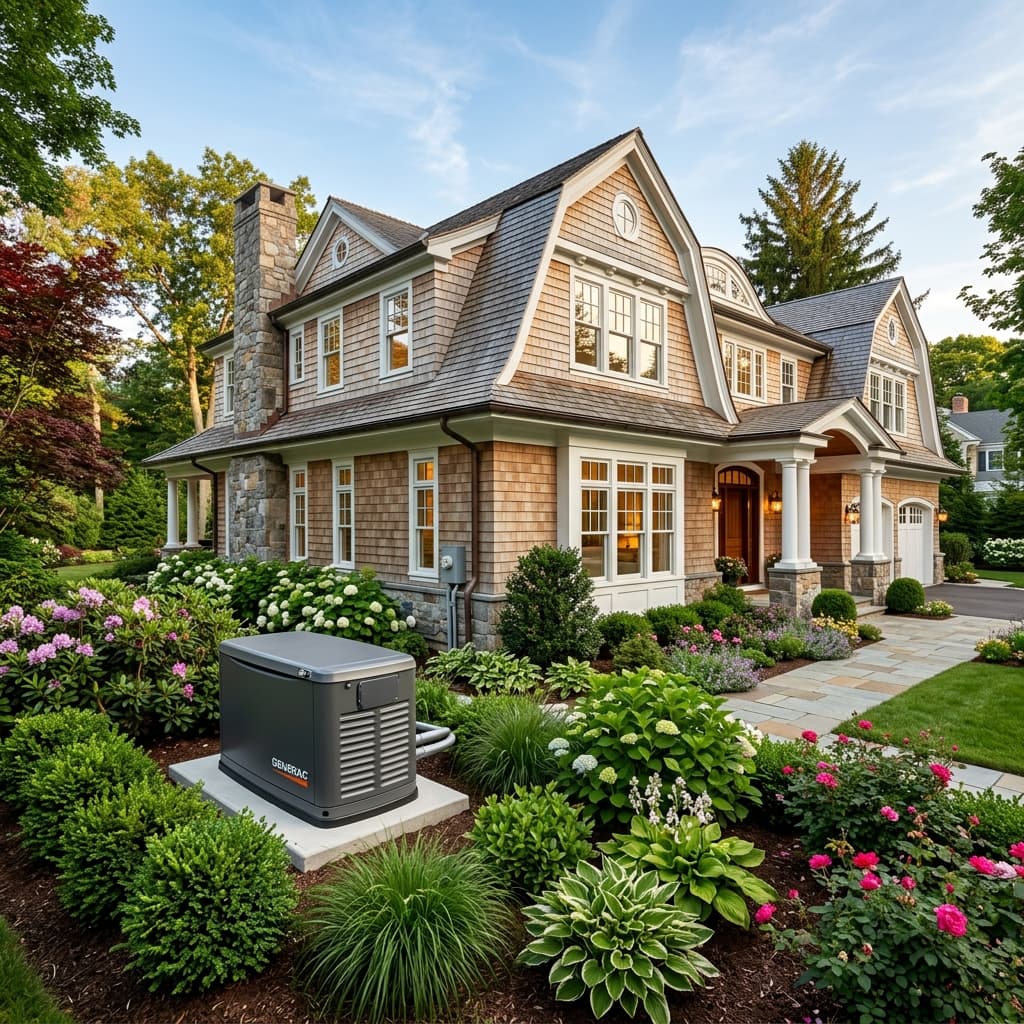
Generator Readiness & Backup Power for Connecticut Storms
If heat, refrigeration, sump pumps, Wi-Fi, medical devices, locks, or security systems need to stay on during an outage, the plan starts before the storm. We coordinate the remodeling, site, fuel, and electrical readiness details.
Connecticut Contracting coordinates planning, project management, concrete pad work, and site readiness.
Built Around Safety, Independence, Security, and Resilience
Backup Power Assessment
We identify the systems that matter most during an outage and map the practical route to keep them online.
- Critical systems list
- Panel review
- Load planning
- Fuel source discussion
- Placement discussion
- Cost range
Essential Power Package
For many homes, the best first step is keeping the core safety and comfort systems powered.
- Furnace or boiler controls
- Refrigerator and freezer
- Sump pump
- Wi-Fi/router
- Select lights
- Medical-device outlet planning
Whole-Home Resilience
Larger plans can combine standby generator readiness with sensors, security backup, and storm-response documentation.
- Automatic transfer switch coordination
- Gas/propane coordination
- Pad planning
- Leak and freeze sensors
- Security backup
- Family emergency plan
Packages and Planning Ranges
Every home starts in a different condition. These ranges frame the conversation; the written assessment creates the final project roadmap and exact scope.
Typical planning range across assessment, phased package, and larger transformation options.
Generator Readiness Assessment
$350 - $750Critical-load, panel, placement, and fuel-source planning before committing to equipment.
- Load list
- Panel review
- Placement review
- Transfer switch planning
Essential Backup Power
$8,500 - $18,500+Critical circuits and transfer readiness for the systems that matter most.
- Critical circuits
- Transfer switch coordination
- Generator coordination
- E-1 electrical work
Storm Resilience Package
$25,000 - $65,000+Generator readiness plus water, freeze, security, Wi-Fi, and family preparedness layers.
- Generator path
- Sump backup
- Leak/freeze sensors
- Family emergency plan
Planning Before the Project Starts
Should the electrical panel be reviewed before choosing a generator?
Yes. The panel, transfer switch path, critical-load list, and available capacity shape whether an essential-load or whole-home generator plan makes sense.
What should be backed up for aging parents during an outage?
Common priorities include heat, refrigeration, sump pump, Wi-Fi/router, select lighting, medical-device outlets, smart locks, security equipment, and phone charging.
Who performs generator electrical tie-ins?
Electrical tie-ins, transfer switch work, and panel work are performed by or through the licensed Connecticut E-1 electrical partner. Gas, propane, and plumbing scopes are handled by properly licensed trade partners.
Helpful Next Reads
Should You Upgrade Your Electrical Panel Before Installing a Generator in Connecticut?
Before buying a standby generator, learn how panel capacity, transfer switches, critical loads, permits, and E-1 partner electrical work shape the right plan.
Read guideResilienceBackup Power Planning for Aging Parents in Connecticut
Protect aging parents during Connecticut outages with critical-load planning for heat, sump pumps, Wi-Fi, medical-device outlets, lights, locks, and security.
Read guideDecision SupportThe Safer Home Checklist for Connecticut Families
Use this Connecticut safer-home checklist to spot bathroom, entry, lighting, security, automation, electrical readiness, and storm resilience priorities.
Read guideGet a Home Safety, Power & Resilience Roadmap
We document what to do now, next, and later so your family can plan the home around safety, function, security, automation, and storm readiness.
