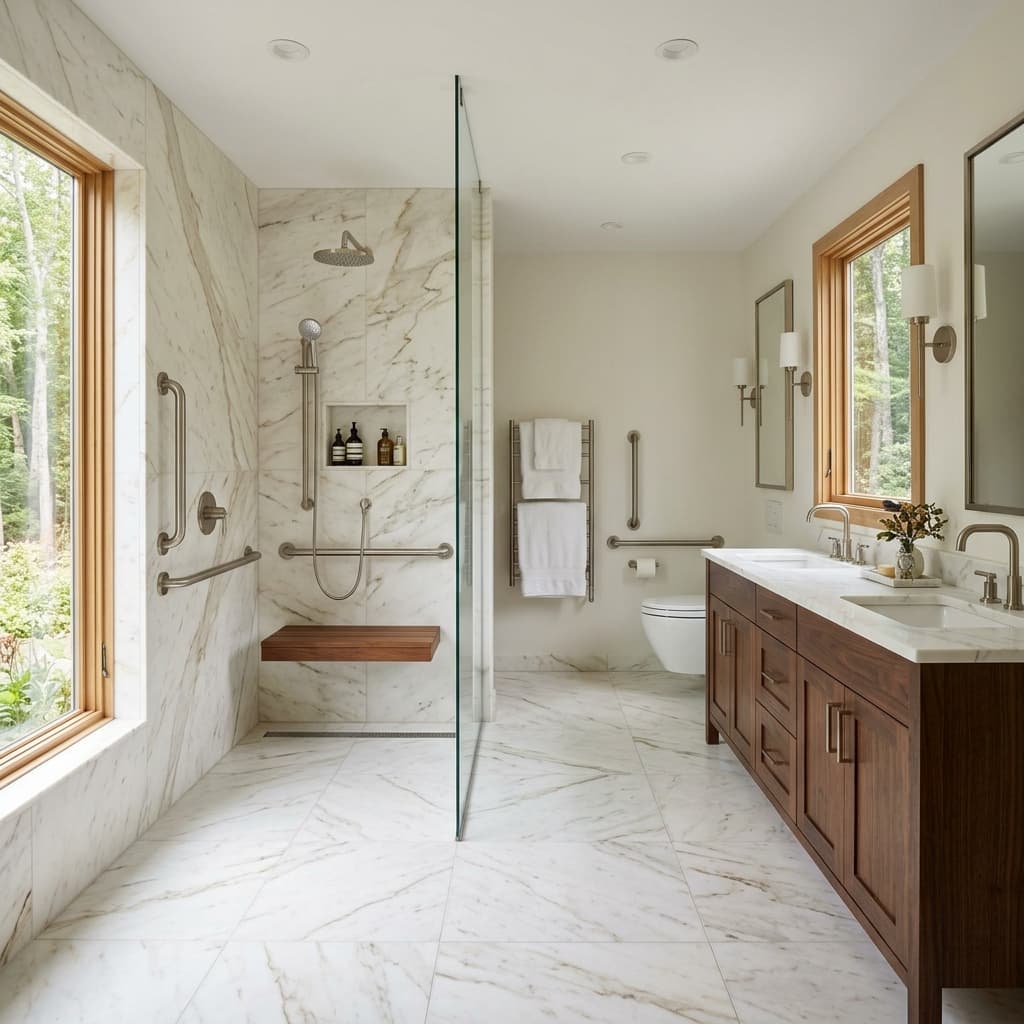
Aging-in-place updates that make daily life easier
When a bathroom, entry, stair, hallway, or daily routine starts creating friction, the project needs more than generic remodel copy. We help sort the right upgrades, phasing, materials, and trade questions before the work starts.
Aging-in-Place Remodeling requests usually start with a mix of photos, timing, access, budget, product questions, and trade questions. We turn that loose context into a cleaner starting point.
How we prepare
Details first, guessing second.
We review the property context, what already happened, what needs to be solved, and what may require trade, permit, inspection, material, or site-access planning.
What happens next
You get a practical next step.
The request can move toward an estimate, site visit, photo review, phased scope, or better trade handoff instead of another vague callback loop.
What We Handle
Sharp project scope before work starts.
The goal is to make the first decision easier: what is wrong, what details matter, what needs review, and what next step fits the project.
Bathroom Access
The bathroom often needs the most practical changes first. We plan bathing, reachability, lighting, and support points without making the room feel institutional.
Tub-to-shower conversions
Low-threshold or curbless showers
Grab bars with blocking
Comfort-height toilets
Non-slip flooring
Bathroom night lighting
Entry, Mobility & Main-Floor Living
Older Connecticut homes often need better entry transitions, handrails, doorway clearances, and first-floor living options.
Threshold corrections
Ramps and handrails
Door widening planning
First-floor bedroom conversions
Main-floor bath planning
Stair and hallway lighting
Simple Smart Layers
Simple automation can make daily life easier without turning the home into a complicated gadget project.
Voice lighting
Smart locks for trusted access
Doorbell cameras
Leak and freeze sensors
Family update options
Device training
Planning Ranges
Budget context before the scope drifts.
Every home starts in a different condition. These ranges frame the conversation; photos, access notes, material choices, trade needs, and site conditions shape the final written scope.
$4,800 - $175,000+
Typical planning range across review, repair, phased project, and larger scope options.
Entry Access Package
$4,800 - $9,500
Fast improvements for risky doors, steps, thresholds, and dark entries.
Threshold work
Handrails or grab points
Lever handles
Entry lighting
Accessible Bathroom Package
$10,500 - $24,500
A bathroom remodel centered on easier bathing and daily comfort.
Tub-to-shower conversion
Grab bars
Comfort-height toilet
Lighting and ventilation
Whole-Home Access Plan
$65,000 - $175,000+
Multi-room plan for long-term comfort, access, and daily-use improvements without guessing at scope.
Bathroom and kitchen updates
Entries and circulation
Lighting
Automation and security
Common Questions
Planning Before the Project Starts
What makes aging-in-place remodeling different from a standard remodel?
Aging-in-place remodeling plans the home around movement, bathing, entry, lighting, reachability, access, and future needs. The work should look residential and comfortable while reducing daily friction.
Can aging-in-place work include electrical or generator readiness?
Yes. Many families pair bathroom, entry, and lighting improvements with panel readiness, backup power planning, smart locks, sensors, or security lighting.
Who usually starts this process?
Homeowners, spouses, relatives, and property managers often start with a project review to understand urgent risks, budget ranges, trade questions, and phased options.
Start With the Details
Send the problem. We will help sort the next step.
Share photos, timing, location, access notes, budget context, and anything already tried. A cleaner request gives the estimate conversation a real starting point.